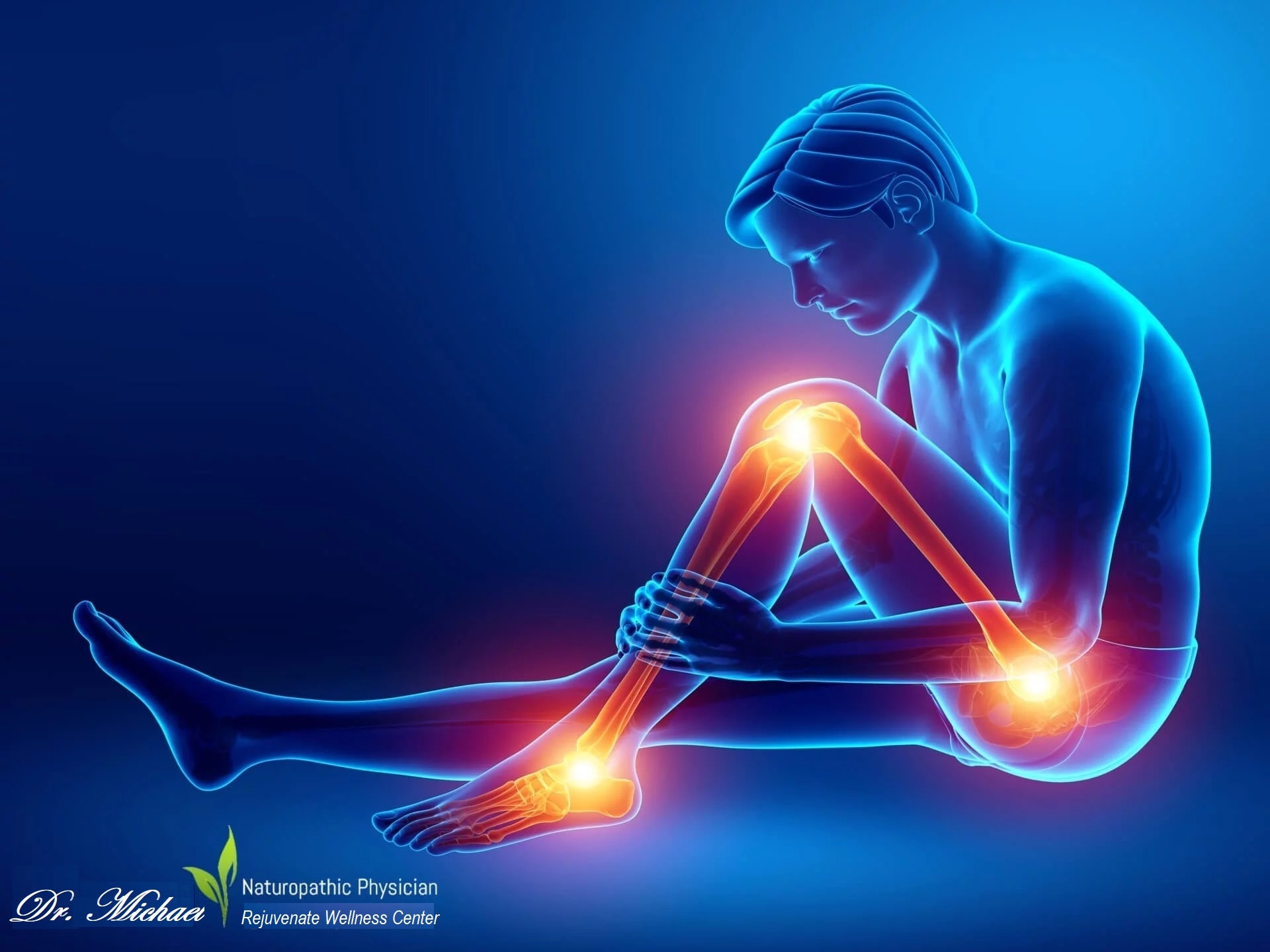
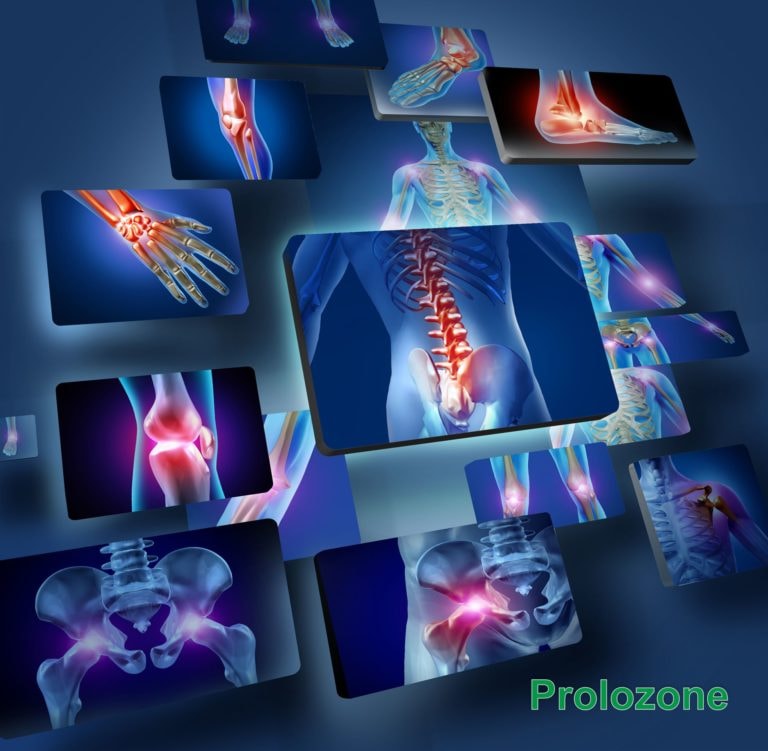
Chronic knee pain does not always require surgery. Learn how Prolozone therapy regenerates damaged cartilage, ligaments, and tendons — and why it is becoming a leading choice for patients in Ventura County seeking a non-surgical alternative.

Knee pain is one of the most common reasons adults seek medical care — and one of the most undertreated. Conventional medicine tends to offer a narrow path: anti-inflammatory medications, cortisone injections, physical therapy, and eventually surgery. For many patients, none of these options address the underlying cause of the pain. They manage symptoms, sometimes temporarily, but they do not rebuild what has been lost.
Prolozone therapy offers a different approach. It is a regenerative injection technique that delivers ozone gas and nutrients directly into damaged joint tissue, stimulating the body's own repair mechanisms. For patients with chronic knee pain — whether from osteoarthritis, ligament laxity, meniscal degeneration, or post-surgical instability — Prolozone therapy can produce meaningful, lasting improvement without the risks and recovery time of surgery.
This article explains how Prolozone therapy works, what the research shows, and who is most likely to benefit.
What Is Prolozone Therapy?
Prolozone therapy is a form of regenerative injection therapy developed by Dr. Frank Shallenberger, MD, HMD. It combines two elements: a nutrient solution (typically containing vitamins, minerals, and homeopathic anti-inflammatories) and medical-grade ozone gas. These are injected sequentially into the affected joint, ligament, or tendon.
The name comes from the Latin prolo, meaning to proliferate or regenerate, and ozone — the active therapeutic agent. Unlike cortisone injections, which suppress inflammation temporarily and can degrade tissue with repeated use, Prolozone works by triggering a controlled healing response.
How Ozone Stimulates Tissue Repair
Ozone (O₃) is a highly reactive form of oxygen. When introduced into a joint space, it does several things simultaneously:
- Increases local oxygen tension. Damaged, degenerating tissue is often hypoxic — starved of oxygen. Ozone corrects this, creating an environment where cellular repair can occur.
- Activates fibroblasts and chondrocytes. These are the cells responsible for producing collagen and cartilage. Ozone stimulates them to proliferate and lay down new structural tissue.
- Modulates the inflammatory response. Rather than suppressing inflammation entirely (as steroids do), ozone helps resolve chronic, low-grade inflammation — the kind that perpetuates tissue breakdown without producing meaningful healing.
- Reduces oxidative stress. Paradoxically, ozone's oxidative burst triggers the body's antioxidant defenses, reducing the net oxidative burden in the joint over time.
The result is a joint environment that is better oxygenated, less inflamed, and actively producing new tissue.
Why Knee Pain Is Particularly Responsive to Prolozone
The knee is a complex joint that depends on the integrity of multiple structures: articular cartilage, the medial and lateral menisci, the anterior and posterior cruciate ligaments, the collateral ligaments, and the surrounding tendons and bursae. When any of these structures degenerates or becomes lax, the entire joint is affected.
Conventional imaging — X-ray and MRI — often reveals the extent of this degeneration in patients with chronic knee pain. What it cannot show is the functional consequence: the instability, the altered gait mechanics, the compensatory muscle tension, and the progressive joint loading that accelerates further breakdown.
Prolozone therapy addresses the structural problem directly. By injecting into the joint space and the surrounding ligamentous attachments, the treatment targets the specific tissues that have lost integrity. Over a series of treatments, patients typically experience:
- Reduced pain with weight-bearing and movement
- Improved joint stability
- Greater range of motion
- Decreased reliance on anti-inflammatory medications
- In many cases, avoidance of surgical intervention
Osteoarthritis of the Knee
Osteoarthritis (OA) is the most common form of knee degeneration, affecting an estimated 14 million Americans. It is characterized by the progressive loss of articular cartilage — the smooth tissue that allows the femur and tibia to glide against each other without friction.
Conventional medicine has long held that cartilage cannot regenerate. This is increasingly being challenged by research into regenerative therapies, including Prolozone. A 2015 study published in the Journal of Prolotherapy found that patients with knee OA treated with Prolozone experienced significant reductions in pain and improvements in function, with effects that persisted at follow-up. The mechanism is consistent with what we understand about ozone's effects on chondrocyte activity.
At Rejuvenate Wellness Center, we treat knee OA as a condition that can be meaningfully improved — not merely managed — in the majority of patients who are appropriate candidates.
Ligament Laxity and Instability
Ligament laxity — the loosening of the stabilizing ligaments around the knee — is a common and frequently overlooked cause of chronic knee pain. It often develops after injury, surgery, or years of repetitive stress. Patients describe a sense of the knee "giving way," difficulty with stairs or uneven terrain, and pain that is difficult to localize.
Prolozone is particularly effective for ligament laxity because it directly stimulates fibroblast proliferation — the process by which new collagen is laid down in ligamentous tissue. Over a series of treatments, ligaments tighten and stabilize, reducing the mechanical stress that drives ongoing pain.
What to Expect During Treatment
A Prolozone treatment session at Rejuvenate Wellness Center begins with a thorough clinical assessment. Dr. Sababi reviews your history, examines the knee, and — where appropriate — reviews imaging to identify the specific structures involved.
The injection itself takes approximately 10 to 15 minutes. A nutrient solution is injected first, followed by a precise volume of medical-grade ozone gas. Most patients describe a sensation of pressure and mild discomfort during the injection, followed by a brief period of achiness as the ozone disperses through the joint space. This typically resolves within 24 to 48 hours.
Most patients require between three and six treatments, spaced one to three weeks apart. The cumulative effect of repeated treatments is what produces lasting structural improvement — each session builds on the last.
Is There Any Downtime?
Prolozone therapy requires minimal downtime. Most patients return to normal daily activities the same day. We recommend avoiding strenuous lower-body exercise for 48 hours following each treatment to allow the healing response to proceed without mechanical disruption.
This is in sharp contrast to surgical recovery, which typically involves weeks of restricted weight-bearing, months of physical therapy, and a meaningful risk of complications.
Who Is a Good Candidate for Prolozone Therapy?
Prolozone therapy is appropriate for a wide range of patients with chronic knee pain. Ideal candidates include:
- Adults with mild to moderate knee osteoarthritis who want to avoid or delay surgery
- Patients with ligament laxity or instability following injury or prior surgery
- Individuals who have had cortisone injections with diminishing returns
- Patients who are not surgical candidates due to age, health status, or personal preference
- Athletes and active adults seeking to maintain function without pharmaceutical dependence
Prolozone is not appropriate for patients with active joint infection, certain autoimmune conditions affecting the joint, or advanced structural degeneration that has progressed beyond the point where regenerative therapy can produce meaningful benefit. A thorough consultation is the only way to determine candidacy accurately.
Prolozone vs. Cortisone: Understanding the Difference
Cortisone injections remain the most commonly administered joint injection in conventional medicine. They work by suppressing the inflammatory response — which can provide significant short-term pain relief. The problem is that inflammation, in the context of joint degeneration, is not simply a symptom to be suppressed. It is part of the body's attempt to repair damaged tissue.
Repeat cortisone injections have been shown to accelerate cartilage degradation over time. They do not address the underlying structural problem, and their effects typically diminish with each successive injection.
Prolozone does the opposite. It works with the body's repair mechanisms rather than against them. The short-term experience may be less dramatic than a cortisone injection — patients do not always feel immediate relief — but the trajectory is different. With each treatment, the joint becomes more stable, better oxygenated, and structurally more sound.
Taking the Next Step
If you have been living with chronic knee pain and have been told that surgery is your only option — or that you simply have to manage it — Prolozone therapy may offer a different path.
At Rejuvenate Wellness Center in Port Hueneme, California, Dr. Sababi performs every Prolozone treatment personally. New patients begin with a comprehensive consultation to review their history, examine the joint, and determine whether Prolozone is the right fit for their specific presentation.
Same-week appointments are available. We serve patients throughout Ventura County and the greater Southern California region.
Explore Topics
Written by
Dr. M.M.S, ND, DC, MS, MUAc, ABDA
Content creator and writer sharing insights and stories.