A painful knee does not always mean surgery is next. Explore the best non-surgical knee options for adults in Port Hueneme, Oxnard, and Ventura County seeking lasting relief.
A painful knee can make a short walk, a flight of stairs, or getting up from a chair feel like a major decision. The best non surgical knee options are not one-size-fits-all treatments. They depend on what is driving the pain, how the joint functions, your health history, and what you need to return to in daily life.
For adults in Port Hueneme, Oxnard, Ventura, and Camarillo who have been told surgery may be ahead, a thoughtful evaluation can help clarify which conservative and regenerative pain management options deserve consideration first. The goal is not to ignore a serious knee condition. It is to make an informed plan that supports comfort, mobility, and function whenever non-surgical care is appropriate.
Why Knee Pain Needs a Specific Diagnosis
"Knee pain" describes a symptom, not a diagnosis. Osteoarthritis is common, particularly when joint cartilage has changed over time, but it is not the only cause. Pain may also relate to a meniscus injury, tendon irritation, ligament instability, overuse, inflammatory conditions, hip or low-back mechanics, or prior trauma.
That distinction matters because a treatment that helps one person may not suit another. For example, exercise-based rehabilitation can be highly useful for weakness and movement compensation, while a sudden locked knee, significant instability, or a new injury may need prompt orthopedic assessment. Persistent swelling, warmth, fever, inability to bear weight, or calf swelling should also be evaluated without delay.
A quality non-surgical plan starts with your history, activity demands, prior imaging when available, medications, and an examination of how the knee moves. It should also consider the ankle, hip, spine, gait, and daily habits that can place extra demand on the joint.
Best Non Surgical Knee Options to Consider
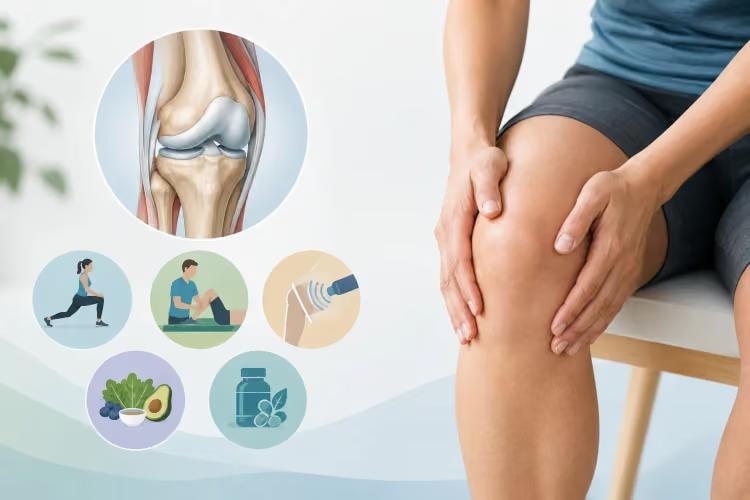
Most people benefit from a layered approach rather than searching for a single fix. The right combination can change over time as symptoms, activity level, and goals change.
Targeted movement and strength support
Appropriate movement is often central to long-term knee care. Strengthening the quadriceps, hamstrings, glutes, and lower-leg muscles can improve joint support and confidence with walking, stairs, and standing. Mobility work may also help when stiffness in the hips or ankles changes how force travels through the knee.
The key word is appropriate. Pushing through sharp pain or following a generic workout can aggravate symptoms. A personalized program should meet you at your current capacity, whether that means walking tolerance, gentle range-of-motion work, controlled strength training, or guidance on returning to recreational activity.
Activity and load modifications
Reducing joint irritation does not always mean giving up the activities you enjoy. It may mean changing duration, surface, footwear, training volume, or recovery time. Low-impact conditioning such as cycling, pool exercise, and certain forms of strength training can be more comfortable for some people than repetitive high-impact activity.
Weight management may also reduce load on the knee for patients for whom it is relevant. This is not a judgment or a quick-fix recommendation. It is one piece of a broader health conversation that includes sleep, nutrition, stress, inflammation, mobility, and realistic routines.
Bracing, supportive footwear, and symptom management
A brace, sleeve, or shoe modification may provide useful support for some patterns of knee discomfort or instability. These tools can be helpful when matched to the individual, but they do not correct every underlying problem. Similarly, heat, ice, topical products, and over-the-counter medications may be part of symptom management when medically appropriate.
Medication decisions should account for your full health picture, including kidney concerns, stomach issues, cardiovascular risk, anticoagulants, and other prescriptions. A clinician can help you understand when these options fit and when they may not.
Joint and spinal mobility care
Knee stress can be influenced by the way the pelvis, hips, ankles, and lumbar spine move. Joint and Spinal Mobilization may be considered when movement restrictions or compensation patterns are contributing to discomfort. It is generally most useful as part of a larger care plan that also addresses strength, activity tolerance, and the primary knee diagnosis.
Where Prolozone Therapy Fits In
For people seeking a regenerative pain management approach, Prolozone Therapy is one non-surgical option to discuss during a naturopathic consultation. Prolozone Therapy is an injection-based treatment that uses an oxygen-ozone mixture alongside selected supportive substances. Depending on the clinical plan, treatment may be directed to areas in or around a painful joint, ligament, tendon, or other musculoskeletal tissue.
At Rejuvenate Wellness Center, Prolozone Therapy is considered in the context of the whole person, not as a universal answer for every painful knee. The consultation process should identify whether your symptoms, exam findings, medical history, and goals make this approach reasonable to consider. It may be discussed for chronic knee discomfort, osteoarthritis-related symptoms, or soft-tissue irritation when a patient is looking for an individualized non-surgical path.
Prolozone Therapy is not a substitute for urgent orthopedic care, fracture evaluation, infection treatment, or surgery when surgery is clearly indicated. It also should not be presented as a guaranteed way to rebuild a joint or eliminate the need for future procedures. Research on ozone-based musculoskeletal therapies continues to develop, and individual responses vary.
As with any injection procedure, there are considerations and potential risks. Temporary soreness, bruising, swelling, or a short-term symptom flare can occur. Your practitioner should review your medical history, current medications, allergies, prior procedures, and any factors that may affect safety before treatment. Questions about the proposed injection area, number of visits, aftercare, expected recovery time, and alternatives are appropriate and encouraged.
Who May Be a Good Candidate for Non-Surgical Care?
Non-surgical knee care may be especially worth exploring when pain has persisted but the knee remains reasonably stable, when symptoms limit activity without creating an urgent surgical situation, or when you want to improve function before making a major procedural decision. It can also be appropriate for people who are not ready for surgery, want another clinical perspective, or need a plan that supports mobility while they consider orthopedic recommendations.
The answer depends on the diagnosis. Advanced joint damage, major structural instability, a complete tendon rupture, or a mechanical blockage in the joint may require a different level of care. A responsible treatment plan recognizes those boundaries rather than promising that every knee can be managed conservatively.
How to Choose a Knee Treatment Plan
The most useful question is not simply, "What is the newest treatment?" It is, "What is most likely to fit my knee, my health, and my goals?" Bring recent imaging reports, prior treatment details, and a clear description of what aggravates or relieves your symptoms to your consultation.
Ask what the working diagnosis is, what functional changes are realistic to pursue, how progress will be measured, and what signs would indicate that a referral or different treatment is needed. A clear plan should include both the treatment itself and what you can do between visits to support the knee.
Explore Topics
Written by
Dr. M.M.S, ND, DC, MS, MUAc, ABDA
Content creator and writer sharing insights and stories.